
Women's Health
Adenomyosis – Causes of Chronic Period Pain & Adenomyosis Treatment in Ayurveda in Amritsar
Adenomyosis – Causes of Chronic Period Pain & Adenomyosis Treatment in Ayurveda in Amritsar. So, if you've been suffering from a very different period of pain, feeling…
- Published February 19, 2026
- 6 minutes read
- Medically reviewed
- By Dr. Amita Abrol
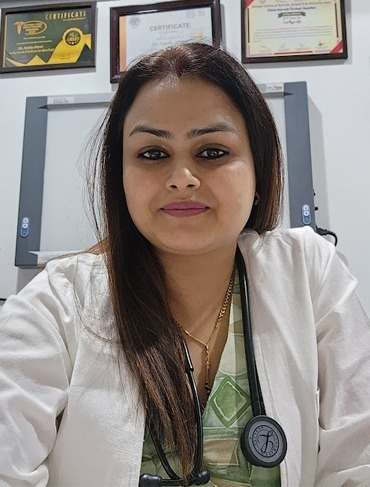
Personally supervised by Dr. Amita Abrol
Gold Medalist BAMS · MS Gynaecology & Obstetrics · 14+ years experience
In This Article
- What is Adenomyosis and the causes for chronic period pain?
- How is adenomyosis different from fibroids
- Understanding Symptoms, Diagnosis, and Ayurvedic Management of Adenomyosis
- Why Adenomyosis is Difficult to Diagnose
- Ayurvedic Perspective on Adenomyosis – Dosha Imbalance & Inflammation
- Auspicious Panchakarma Treatments:
- Powerful Ayurvedic Herbs That Support Uterine Health
- Holistic Healing & Hope – Managing Adenomyosis Naturally
So, if you’ve been suffering from a very different period of pain, feeling that it’s deeper, heavier, more unrelenting than anything you’ve experienced in the past, and it just feels a bit “wrong”, you are not the only woman.
What is Adenomyosis and the causes for chronic period pain?
Adenomyosis is defined as endometrial tissue that has grown into the myometrial tissue. On a monthly basis this endometrial tissue thickens and begins to shed. This results in bleeding and pain.
The condition is also associated with an enlarged (bulky) uterus and premenstrual discomfort.
Here’s what the numbers tell us, but remember—you are not a statistic. Adenomyosis can cause infertility in 30-40% of cases as well as painful periods in 50-60% of women of childbearing age. The condition is a response to the estrogen hormone and in most cases, occurs in 70% of women found to have the condition, although onset occurs premenopausally.
The etiology of Adenomyosis remains unconfirmed by orthodox medicine but evidence indicates the presence of several potential etiological factors:
- Obstetric history – Women who have experienced pregnancy (especially after caesarean section) or uterine operation appear to be more prone to develop the condition.
- Intrauterine inflammation – Ongoing inflammation of the endometrial lining may promote movement of endometrial cells into the muscular layer.
- In utero hormone medication – Use of such medication, especially those as part of infertility protocols is more likely to cause Adenomyosis.
How is adenomyosis different from fibroids
This is one of the most common questions I hear in my practice, and it’s an important one.
Adenomyosis and fibroids can often seem alike as they have similar symptoms. Although they are two separate diagnoses, adenomyosis is when the endometrial tissue invades into the muscular wall of the uterus, whereas fibroids are a benign muscular growth with connective tissue. Women diagnosed with adenomyosis are more likely to have severe pain and heavy bleeding, compared to women with fibroids that are more likely to have frequent urination and bowel prolapse.
Another point to tell them apart is the fact that adenomyosis tends to spread throughout the muscular tissue of the uterus and can be impossible to surgically extract, whereas fibroids tend to be well-rounded growths that can be individually removed.
The cause of adenomyosis is still under investigation, but certain causes have been shown to add to the development of the condition:
- Women who had previous surgical procedures, such as Caesarean section and uterine operations
- Prolonged high levels of Estrogen
- Age over 35 years
The cause of fibroids has also not been established, but secondary causes that do increase the risk of development include:
- Genetics – Some women are more susceptible than others
- Excess weight – Excessive estrogen is proved to be a contributing factor to fibroid growth as it promotes tissue division
- Family history – The ovaries are the primary producers of estrogen, and if there is a history of fibroids in the family, women are more at risk
- High estrogen levels – as in other hormonal imbalances, also promote fibroid growth
Understanding Symptoms, Diagnosis, and Ayurvedic Management of Adenomyosis
When Your Body Is Trying to Tell You Something
I’ve spoken to hundreds of women across the kitchen table and before taking action dismissed their symptoms as ‘just bad periods’ or ‘part of being a woman’, but your body deserves to be heard.
Here are the common symptoms of Adenomyosis:
a) Long periods – Profuse bleeding with blood clots
b) Pelvic pain – Severe tenderness and pain particularly during periods
c) Enlarged and tender uterus – Swelling of the uterus caused by growth of tissue
d) Pregnancy problems – Adenomyosis can also affect conception and cause pregnancy problems
Why Adenomyosis is Difficult to Diagnose
Adenomyosis is one of the most frustrating things to get diagnosed with. I have known women to be told at their gynae appointment that ‘everything looks fine’ for years, despite crippling pain.
Adenomyosis can be very tricky to diagnose as it tends to be a diffuse process within the muscular layer of the womb and difficult to see without very advanced forms of scanning.
As it causes no obvious physical signs or laboratory abnormalities, and has highly similar symptoms to both endometriosis and fibroids, coupled with a high rate of concurrent pathology with 20-50% coexisting pathology, unidentifiable with standard non-invasive diagnostic measures, diagnosis can be very difficult.
A transvaginal ultrasound has no one consistent appearance of adenomyosis, but suspicion should be made when the uterus becomes round in shape and shows multiple shadowy areas on the image, sometimes in a fan-like shape. The inner and outer muscular walls become indistinguishable, and cystic modifications can sometimes be seen. Other indicators are an irregular or broken up line of the junction zone, with pinpoint bright spots. A number of these indicators result in the resumption of a confident diagnosis, although focal invasion is occasionally seen rather than diffuse, in which case, a false diagnosis of fibroid could be given. MRI scans do however, tell the differentiation much more accurately.
The following tests are sometimes utilized by health professionals to identify adenomyosis:
- Pelvic examination
- Ultrasound
- Imaging scan
Ayurvedic Perspective on Adenomyosis – Dosha Imbalance & Inflammation
In Ayurveda, we don’t just see adenomyosis as a uterine problem—we see it as your body’s way of showing a deeper imbalance that needs gentle, comprehensive care.
In Ayurveda, inflammation associated with Adenomyosis (Udavartini Yonivyapada being the equivalent) is seen as a chronic inflammatory disorder, caused by the disturbance of the Vata (which controls pain) and Pitta (which controls heat and inflammation) elements, within the body. This causes a build up of toxins (ama), and a malfunction of processes within the body which necessitate detoxification and anti-inflammatory treatment.
- Dosha Derangement is a derangement between Vata and Pitta, causing irregular tissue spread (Avarana). Vata brings about pain, and Pitta causes heat and bleeding.
- Ama is the accumulation of toxins from sluggish digestion, and congestion of channels, resulting in abnormal cell growth
- Vata allows for tissue to grow in the wrong direction within the body.
How Ayurveda Can Help You Heal
For the adenomyosis treatment, Ayurveda takes a comprehensive approach, that involves cleansing and purification procedures via Panchakarma techniques, to re-establish the powers of the body.
Auspicious Panchakarma Treatments:
a) Abhyanga: Oil Massage
The application of warm herbal oils across the whole body to promote detoxification, relaxation and soothe swelling.
b) Uttar Basti: Uterine Enema
A method whereby herbal oils or liquids are placed directly into the rectum and proven to diminish uterine pain and inflammation.
c) Uterine Pichu: Localized Oil
A technique where an herbal oil soaked tampon is inserted into the vagina, to directly affect the uterus.
d) Nasya: Nasal therapy
Putting herbal oils or powders directly into the nose to cleanse the nasal passages.
Powerful Ayurvedic Herbs That Support Uterine Health
Herbal remedies may be prescribed to directly affect the reproductive organs by balancing hormones and reducing inflammation. Herbs good for Adenomyosis:
- Ashoka (Saraca asoca): is believed to promote normal menstrual flow, strengthen the uterus and is thought to stimulate the breakdown of unwanted tissue.
- Dashamoola: Promotes inflammation reduction, relieves pain and supports the health of the reproductive tissues.
- Aloe Vera (Kumari): A cooling herb that alleviates inflammation and removes excess bleeding.
- Guggulu: Clears Kaphic blockages allowing for cell regeneration.
- Manjistha (Rubia cordifolia): A blood purifier and anti-inflammatory herb that calms pitta.
Holistic Healing & Hope – Managing Adenomyosis Naturally
If you are here, reading this, and you see yourself in these symptoms, understand that you are not alone and you do not have to suffer. The condition known as adenomyosis is very real, and no, your pain is not just in your head: there are ways, natural and nurturing ways, to be on your way to healing your body. It may come as a surprise to many, but many women find relief from both their bodies and their minds with the right Ayurvedic care. Your body is telling you it needs help. With care and patience, you can find relief.
Have questions about your own symptoms?
Every case is different. Book a consultation with Dr. Abrol for a treatment plan personalised to your Prakriti and health history.
In This Article
- What is Adenomyosis and the causes for chronic period pain?
- How is adenomyosis different from fibroids
- Understanding Symptoms, Diagnosis, and Ayurvedic Management of Adenomyosis
- Why Adenomyosis is Difficult to Diagnose
- Ayurvedic Perspective on Adenomyosis – Dosha Imbalance & Inflammation
- Auspicious Panchakarma Treatments:
- Powerful Ayurvedic Herbs That Support Uterine Health
- Holistic Healing & Hope – Managing Adenomyosis Naturally
Book a Consultation
Get a personalised Ayurvedic treatment plan from Dr. Abrol - in clinic or online.
Dr. Amita Abrol
Gold Medalist BAMS, MS Gynaecology
Continue Exploring
Related Treatments & Conditions
Keep Reading
More on Women's Health

Ready to Start Your Ayurvedic Healing Journey?
Book a clinic visit or online consultation with Dr. Abrol, based on what you've just read.