
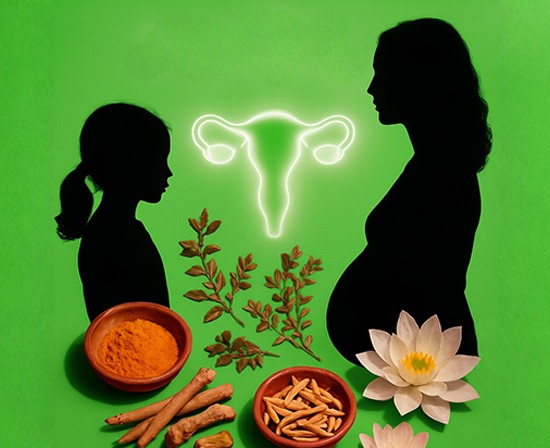
Understanding Irregular Periods: The Perspective of An Ayurvedic Doctor for Teens, Women & Mothers
In today’s society, so many girls and women go through irregular periods, yet almost nobody talks about it openly. It’s still a taboo in our society. In my clinic, I meet teenagers who get scared when their cycle suddenly changes; young women who get anxious every time their period is late, and mothers who walk in worried because their daughters’ cycles don’t look “normal.”
All of these concerns are real, but the lack of knowledge leads to anxiety or panic
You might have wondered at one time or another:
- Why did my cycle suddenly shift this month?
- Why is one month smooth, and the next completely unpredictable?
- Can stress or bad eating habits really disturb my period?
In Ayurveda, the menstrual cycle is so much more than a date on a calendar. It mirrors inner balance: the health of a woman’s digestion, sleep, routine, emotions, and hormones. When these are steady, the cycle usually remains steady as well. But when life becomes chaotic-even just a little cycle often mirrors that disturbance.
After years of practice, I’ve noticed one simple thing:
Once girls know the reasons why their periods have become irregular, half the fear will already melt away.
Why Do Periods Become Irregular?
A Simple, Clear Breakdown**
1. Stress — the quiet disruptor
I see stress as one of the biggest reasons. Whether it’s examination pressure, relationship issues, work deadlines, family expectations, or even overthinking, these disturb the hormonal signals that regulate the cycle.
It is explained in Ayurveda as increased Vata and Pitta, which can easily disturb the rhythm of the body.
2. Modern lifestyle
Late nights, junk food, missed meals, late-night scrolls, and coffee on an empty stomach are normal, but in the long run, they have weakened digestion. When Agni is irregular, so too tends the menstrual cycle.
3. Sudden weight changes
The sudden gain or loss affects ovulation, particularly in a teenager whose hormones are already tuning themselves.
4. Nil or excessive exercise
Too little activity slows metabolism, and extreme exercise shocks the body. Both disturb the cycle. Moderation is the key.
5. Sleep imbalance
It directly influences reproductive hormones: sleeping at 2 AM, waking up tired, or not having a routine at all.
Restful sleep is one of the non-negotiable pillars of women’s health according to Ayurveda.
6. PCOS, thyroid issues & hormonal imbalance
PCOS/PCOD and Thyroid problems are commonplace today-more so because stress and irregular routines have almost become the “new normal.”
When ovulation is altered, a cycle becomes naturally unpredictable. According to Ayurveda, those are deeper doshic disturbances, and it encourages early attention rather than fear.
PCOS & Irregular Periods: Are They Connected?
Very much.
When ovulation becomes irregular (or slows down), the cycle stretches, extends unpredictably , or at times stops altogether. With that may come symptoms like acne, rapid weight changes, hair thinning, or unwanted facial hair.
From an Ayurvedic perspective, this usually indicates an imbalance between Kapha and Vata. The solution is straightforward: improve digestion and metabolism, reduce stress, balance hormones, and allow the cycle to return to its normal rhythm. It doesn’t happen overnight, but it will happen.
This is why long gaps between periods should never be ignored. The body always gives small signs before larger issues arise.
If ovulation slows, the length of the cycle naturally extends, becomes irregular, or occasionally ceases completely. In addition to that, you may notice symptoms such as acne, rapid weight fluctuations, thinning hair, or the growth of unattractive facial hair.
According to Ayurveda, this is typically due to an excess of Kapha and inadequate Vata. The answer is simple: fix digestion and metabolism, calm the stress hormones down, balance hormones, and stop messing with the cycle. It’s not overnight, but it will happen.
And it is for this reason that long pauses between periods should never be taken lightly. The body always shows little signs before big things occur.
A Real Case That Stayed With Me
There was this girl, she’s 19, who came over with her mom. Her first reaction was annoyance, not concern. But her mother had clasped her hands tightly together – a sign of something else, of something already so often talked over at home that it came to neither parent nor child as a surprise. The girl had no menses for about 3 months. “I did my exams, I haven’t been going to bed on time, and I’ve spent too much time on my phone,” she said. She kind of rationalized herself to women; besides, she was awfully tired. The more we talked, the better we could put together what had happened.
“The more we talked, realized, and put pieces together of what was happening in her body. She’d had some acne that came up on her skin – not just normal, one or two spots; the persistent kind of hardheaded chin-situated acne. The clothes had turned a little tighter than usual, her hair was coming out from her chin, and there were mornings when she would wake up feeling irritable without cause. The first indication of lethargy, the girl said, was when she told her parents: “I don’t feel like myself.” When all of a sudden the mother cuts in, very softly, almost like she didn’t want her daughter to hear, even though it’s not like the girl was sitting across from us. “She’s out of breath taking the stairs these days.
We ran some checks, and yes—PCOS.
But what stood out wasn’t the diagnosis; it was how long she had been trying to convince herself everything was “normal,” just stress, just college, just lifestyle. And this is exactly why conversations around PCOS and irregular periods are necessary. Most cases don’t start with a big alarm. They start quietly, in the background, and show up only when the body can’t keep compensating anymore.
I made a simple plan for her:
- small corrections in diet, a few herbs to relax her system,
- and a soothing therapy that finally helped her sleep peacefully.
Gradually, her anxiety softened, her energy returned, and her cycle found its way back.
To girls like her, I always say:
Your body isn’t against you; it’s talking to you. And with the right care, it always comes back to balance.
**How Ayurveda Helps Bring Back Balance
Ayurveda never considers irregular periods alone as a problem. It focuses on why the imbalance is happening.
Here’s how we usually support women at the clinic:
1. Supporting digestion & metabolism
Warm, regular meals, simple food corrections, and herbs supporting Agni help stabilize internal rhythms, which in turn help with the cycle.
2. Soothing one’s mind & reducing stress
Mild treatments like Shirodhara or warm Abhyanga oil massage help to calm the elevated Vata and settle the nervous system, which is one of the major factors in delayed cycles.
3. Supporting hormonal rhythm
Depending on the patient, herbs such as Shatavari, Lodhra, or Ashoka can be advised. These traditionally have been used in Ayurveda for reproductive wellness.
4. Correction of deeper doshic imbalance
If toxins or inflammation are contributing, mild Panchakarma-based therapies, such as Basti or Virechan, are advised under proper guidance.
5. Age-based lifestyle correction
The approaches between teenagers and adult women differ. We work on:
- sleep timing
- stable meals
- screen discipline
- emotional regulation
- Smooth movements, without extremes
These little changes tend to make a much greater difference than imagined.
A Final Message
To Every Teen, Woman & Mother Reading This, irregular periods have become very common; they just shouldn’t be ignored or feared. Be it a teen trying to comprehend her bodily changes, a young woman engrossed in study-pressure or work-pressure life, or a mom guiding her, this needs to be kept in mind: Your cycle is your body’s way of speaking to you. When it shifts, it requires attention, not panic. With proper understanding, a routine, and supporting Ayurvedic care, most women start getting in tune with their bodies. And gradually, the cycle resumes its rhythm. If your periods have been irregular for a long time-or if the uncertainty is affecting your peace of mind-then seek help early, gently, and without fear. Because when you start listening to your body, it always responds. It just needs a little patience.